Islington council rules for bulky waste and rubbish disposal
Posted on 01/08/2026
Islington Council Rules for Bulky Waste and Rubbish Disposal: A Practical Local Guide
If you live, work, or manage property in Islington, bulky rubbish has a habit of appearing at the worst possible moment. A sofa that no longer fits the room, a broken fridge in a narrow flat, a pile of old renovation offcuts after a quick DIY weekend - suddenly you need a plan. This guide explains the Islington council rules for bulky waste and rubbish disposal in plain English, so you can sort things out without confusion, penalties, or one of those frustrating "we can't take that" surprises.
We'll walk through what counts as bulky waste, how council-style disposal usually works, what to watch for with mixed rubbish, and when a private clearance option makes more sense. Along the way, you'll also find practical checklists, common mistakes, and a real-world example from an Islington-style property situation. Let's keep it simple and useful.
Why Islington council rules for bulky waste and rubbish disposal Matters
Bulky waste is not just "big rubbish." It often includes items that are awkward to move, difficult to sort, or expensive to dispose of if handled badly. Think mattresses, wardrobes, broken tables, white goods, old carpets, or a stack of mixed household items left over after a clear-out. In a dense borough like Islington, where stairwells are often tight and pavements are busy, the difference between tidy disposal and messy fly-tipping can be very small indeed.
That is why the rules matter. They help keep shared spaces clear, reduce blockages on streets, protect sanitation, and make sure waste goes to the right place. They also matter to you because failing to follow the local approach can lead to delays, extra costs, or items being left behind. Truth be told, many "rubbish problems" are really planning problems.
For landlords, managing agents, homeowners, tenants, and local businesses, understanding the rules also protects the property itself. A lobby filled with furniture, a front garden used as a dumping point, or waste left out at the wrong time can create complaints very quickly. If you manage regular clear-outs, you may also want to explore the broader range of waste removal services available in Islington to see what fits your situation best.
How Islington council rules for bulky waste and rubbish disposal Works
In practical terms, bulky waste disposal usually follows one of a few routes: a council collection arrangement, a reuse or donation route where items are still usable, a trip to a permitted recycling or disposal point, or a licensed private clearance service. The right choice depends on the type of waste, how much you have, and whether the items are safe to move.
Most councils in London distinguish between general household rubbish and larger items that need a separate collection method. Bulky waste is typically not meant to be mixed loosely with everyday black-bag waste. A sofa, for example, is handled very differently from a bin bag of food packaging. Mixed loads can be refused or reclassified, especially if they contain heavy fragments, sharp material, electricals, or construction debris.
As a rule of thumb, you should separate the load before you try to get rid of it. That means one pile for reusable items, one pile for standard household rubbish, and a separate pile for anything hazardous or specialist. If you are dealing with renovation leftovers rather than domestic clutter, it helps to read up on builders waste removal in Islington, because rubble, plasterboard, tiles, and timber usually need a different handling approach.
There is also a human factor. Islington's streets and properties can be awkward. Narrow stairs, basement flats, shared hallways, and limited parking can all affect timing and lifting safety. That's one reason many residents compare council-style disposal with professional collection. It is not about being fancy. Sometimes it is simply about whether two people can safely carry a wardrobe down three flights without damaging the walls. We've all seen that scratch on the banister nobody admits to.
Key Benefits and Practical Advantages
Following the proper disposal route is not just about compliance. It can make the whole job easier and less stressful. Here are the main practical advantages:
- Cleaner communal spaces - less clutter in hallways, bin stores, front gardens, and pavements.
- Lower risk of refusal - correctly sorted waste is far more likely to be accepted or collected without hassle.
- Better recycling outcomes - many bulky items contain reusable materials that should not end up in general waste.
- Fewer access problems - planning the removal in advance helps with parking, lift access, and stairwell constraints.
- Reduced fly-tipping risk - clear disposal routes make it less tempting to leave items "just for now."
There is also a quality-of-life benefit that people underestimate. A room looks bigger once the broken chair, spare mattress, and random broken desk are gone. The space feels lighter. Less noise, less mess, fewer "I'll deal with that next week" moments.
If your priority is keeping costs sensible while still disposing of waste properly, it may be worth reviewing pricing and quote guidance before choosing a service. That can help you compare your options without falling for the cheapest number on the page, which is often not the real number by the end.
Who This Is For and When It Makes Sense
This topic matters to a fairly wide group of people, and not just homeowners clearing a spare room. In practice, it is relevant if you are:
- a tenant moving out of a flat and leaving behind old furnishings;
- a landlord preparing a property for new occupants;
- a letting agent handling an end-of-tenancy clearance;
- a homeowner replacing bulky furniture or appliances;
- a business with worn office furniture or packaging waste;
- a builder, decorator, or tradesperson managing non-hazardous site waste.
It also makes sense whenever items are too large for normal bin collection, too awkward to carry to the kerb safely, or too mixed to be dealt with in one quick throw-out. If you live in a flat above ground level, especially in older Islington buildings, access can become the deciding factor. A bulky item may be "simple" in theory and a headache in real life.
For flat moves, small estates, and homes with shared access, the logistics can be trickier than the waste itself. If that sounds familiar, a guide to narrow-stair access rubbish clearance solutions may be useful reading alongside this article.
Step-by-Step Guidance
Here is a practical way to handle bulky waste disposal in Islington without overcomplicating it.
- Identify what you actually have.
Make a simple list: furniture, white goods, bags of mixed rubbish, garden waste, renovation debris, or electrical items. Don't guess. A "bit of everything" usually causes the most problems. - Separate reusable, recyclable, and disposable items.
If an item can be reused, donated, or sold, move it out of the waste pile. If it can be recycled, keep it separate where practical. Mixed loads can be harder to process. - Check whether the item is classed as hazardous or specialist.
Some items need special handling, such as fridges, freezers, certain electricals, paints, solvents, or anything contaminated. If in doubt, treat it cautiously. - Decide how the waste will be removed.
For a single sofa or mattress, a local bulky collection arrangement may be enough. For a full house clear-out, a licensed clearance team may be faster and less disruptive. - Make the access route ready.
Clear hallways, unlock gates, move cars if needed, and protect walls or floors if items are heavy. It saves a lot of awkward shuffling later. - Book the right time.
If you are in a busy street or near a difficult entrance, choose a time with enough room for loading. A rushed slot often creates stress, and stress creates mistakes. - Keep records if you are a landlord or business.
Make a note of what was removed, when, and by whom. For commercial waste, paperwork and duty-of-care records are not a nuisance; they are part of sensible operations.
A little preparation goes a long way. Even ten minutes of sorting before collection day can save an hour of back-and-forth on the pavement. That sounds small, but in real life it matters.
Expert Tips for Better Results
Here are the things that tend to make the biggest difference in practice.
- Photograph the waste first. A quick set of pictures helps you or the service provider judge volume and access accurately. It avoids vague estimates.
- Measure anything awkward. Wardrobes, beds, large desks, or appliances can be trickier than they look. Measure doorways and stair turns too, not just the item.
- Leave loose items bagged. Small debris, broken drawers, and screws create mess fast. Bagging them keeps the job cleaner and safer.
- Remove what you can reuse separately. Selling or donating a decent table is better than paying to dispose of it. Obvious, but easy to forget in a hurry.
- Ask about restricted items early. Many disposal problems come from one object being unsuitable, such as an appliance with a refrigerant system or a load mixed with plasterboard.
- Be realistic about access. If you think it will take two people and a trolley, say so. If it needs careful carrying down a spiral staircase, say that too. It saves everyone a headache.
Expert summary: the smoothest bulky waste jobs are the ones that are sorted before anyone starts lifting. Clear items, clear access, clear expectations. It really is that simple.
If you are comparing disposal methods for mixed domestic waste, a page on domestic waste collection in Islington can help you understand what is typically handled as general household material versus bulkier loads.
Common Mistakes to Avoid
The same mistakes show up again and again. Luckily, they are easy to avoid once you know what to look for.
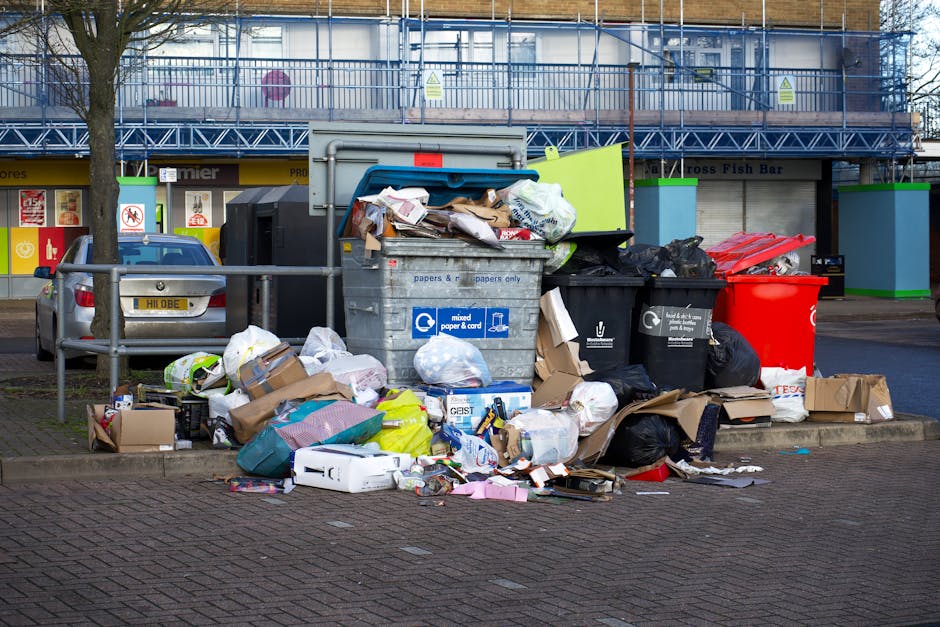
- Leaving items on the pavement too early. This can create complaints, attract extra rubbish, and in some cases be treated as improper disposal.
- Mixing everything into one pile. A sofa, broken mirror, garden clippings, and plasterboard in one heap is a mess for sorting and may increase the chance of refusal.
- Assuming appliances are just "big metal boxes." White goods often need specific handling, especially if they contain refrigerants or electrical components.
- Forgetting access issues. Shared stairwells, parking restrictions, and narrow entrances can turn a five-minute job into a slow one.
- Picking the cheapest option without checking what is included. Hidden extras are frustrating, and yes, they happen. More often than people like to admit.
- Using an unlicensed collector. If waste is dumped illegally after collection, the trail can come back to you. That is not the kind of surprise anyone wants.
One small but important point: if the items came from a garden tidy-up, do not automatically place them with general bulky waste. Green material often belongs in a separate stream. For that, garden waste removal in Islington is a more fitting route.
Tools, Resources and Recommendations
You do not need a complicated toolkit to handle bulky waste well. A few basic things make the process much easier:
- A phone camera for photos and measurements;
- Masking tape or sticky notes to mark items that are staying, being reused, or being removed;
- Heavy-duty gloves for broken or dusty items;
- Old sheets or moving blankets to protect floors and door frames;
- A simple checklist for what needs sorting before collection day.
It also helps to know which disposal route suits the job. If you need a single item removed, booking an appropriate collection can be quick and tidy. For larger jobs, a clearance team is often more efficient because they can remove multiple item types in one visit.
For further reading within the same site, you may find furniture removal in Islington and white goods and appliance disposal useful if your bulky waste includes sofas, beds, washing machines, fridges, or similar heavy items.
If you are curious about environmental impact and why correct disposal matters beyond the immediate job, there is also a helpful article on the environmental impact of landfills. That perspective is easy to overlook when you are just trying to clear a room by Friday afternoon.
Law, Compliance, Standards, or Best Practice
When waste disposal is involved, compliance is not an optional extra. The practical rule is straightforward: waste should be handled by a responsible route, and anyone collecting waste should be properly authorised to do so. For households, that means not leaving items in places or at times where they create nuisance or unlawful dumping concerns. For businesses and landlords, it also means keeping a sensible audit trail.
Best practice in the UK generally includes using a reputable collector, separating waste where possible, and making sure materials are transferred to legitimate facilities. For commercial settings, duty-of-care expectations are especially important. Even if you are only clearing a small office, you should know where the waste went and whether the collector was suitable for the task.
At a minimum, look for clear information about licensing, insurance, safety, and how items are treated once removed. If a service is vague about those points, that is a small warning sign. Not always, but often enough to pause and ask more questions. If you want to check how a provider frames these issues, the site's waste carrier licence and compliance information is a sensible place to start.
For extra reassurance around operational standards, you may also want to read about insurance and safety practices, especially if your property has limited access, fragile interiors, or heavier items that need careful handling.
Options, Methods, or Comparison Table
There is no single "best" way to dispose of bulky waste. It depends on volume, speed, access, and whether the items still have value. Here is a simple comparison to help with decision-making.
| Method | Best for | Pros | Possible drawbacks |
|---|---|---|---|
| Council-style bulky collection | Single items or small household loads | Simple, local, familiar | May have restrictions, booking lead times, or item limits |
| Reuse, donate, or sell | Usable furniture and appliances | Lowest environmental impact, can save money | Not suitable for damaged or unsafe items |
| Private licensed clearance | Mixed loads, larger clear-outs, awkward access | Fast, flexible, can handle multiple item types | Cost depends on volume and access |
| Specialist disposal | White goods, certain electricals, builders' waste | Correct handling of specialist materials | Not all items are accepted in the same load |
As a practical example, a broken chest of drawers and an old mattress may be easier to remove together in one pre-planned collection. A half-refurbished flat with packaging, offcuts, and a fridge is a different story. That one needs more careful sorting, and probably a more flexible service.
Case Study or Real-World Example
A typical Islington situation might look like this: a tenant leaves a one-bedroom flat near a busy high street. The room is clear, but the hallway contains an old sofa, a coffee table, a broken desk, a small fridge, and several bags of mixed rubbish. The building has a narrow staircase, no lift, and limited loading space outside.
If the items were left untouched, the landlord would be dealing with more than just waste. There would be complaints from neighbours, a risk of damage to paintwork and corners, and probably some awkward phone calls. Instead, the sensible approach would be to separate the fridge from the furniture, keep the bagged waste distinct, and arrange a removal method that could handle the access issues safely.
In a case like this, a straight "throw it out" approach is usually the worst one. The better route is to check each item, plan the sequence, and use a service that understands bulky waste as well as the reality of Islington buildings. That's especially true where access is tight and timing matters. One person holding a door, another manoeuvring a sofa, and someone else trying not to step on the neighbour's shopping bags - it gets busy quickly.
If the property is part of a larger turnover, you may also find our house clearance in Islington page helpful, because larger residential clear-outs often involve a mix of bulky and general waste, not just one item category.
Practical Checklist
Use this quick checklist before collection day:
- Confirm which items need removing.
- Separate reusable items from waste.
- Check for electricals, white goods, or specialist materials.
- Remove loose rubbish from around bulky items.
- Measure doorways, stairs, and tight turns if access is limited.
- Move vehicles or obstacles that could block loading.
- Take a few photos if you need a quote or assessment.
- Ask whether insurance and licensing are in place.
- Keep proof of collection or disposal where relevant.
- Make sure nothing you want to keep is accidentally left in the pile. It happens more than people think.
If you want a broader look at property planning and local living patterns in the borough, this guide to real estate in Islington can give useful context, especially for landlords and owners planning refurbishments or turnover clearances.
Conclusion
Getting bulky waste right in Islington is not really about one single rule. It is about handling waste responsibly, separating what can be reused or recycled, choosing the right disposal route, and avoiding the common traps that make a simple job harder than it should be. Once you understand the basics, the whole process becomes far more manageable.
The main thing to remember is this: do not leave it to chance. A small amount of planning saves time, money, and stress, and it usually gives you a cleaner result too. Whether you are clearing out one item or dealing with a full flat, the same principle applies - sort first, then move.
Get a free quote today and see how much you can save.
And if you are standing in the middle of the room wondering where to begin, start with the easiest item first. That first bit of progress always makes the next step feel lighter.